Guides & articles
How does audience measurement work in DOOH?
Digital Out-Of-Home (DOOH) advertising requires a unique approach to measuring audience — quite different from traditional digital channels. In this article, we break down how impression multipliers work, how audience is measured, and how advertisers can use this to their advantage.
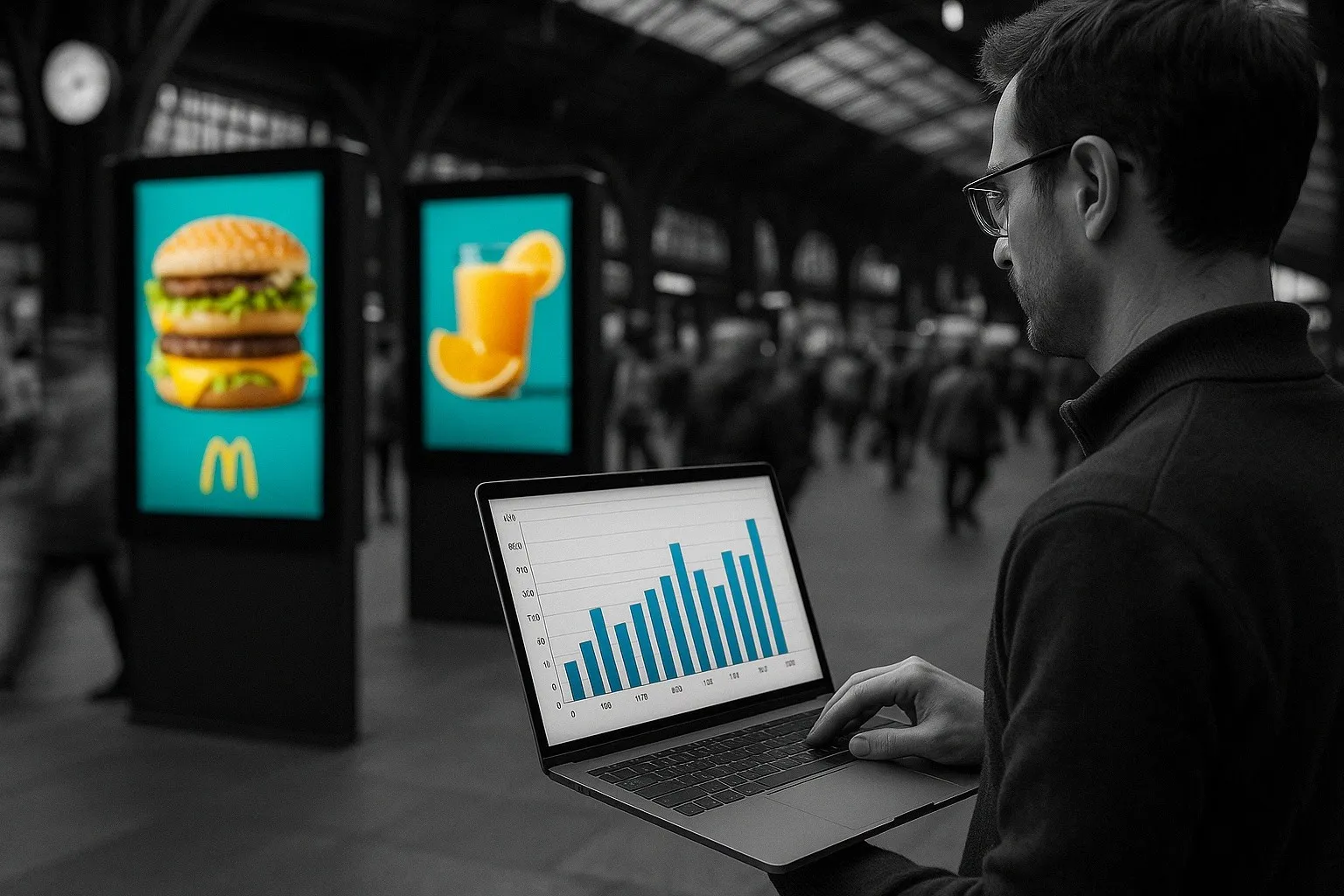
Digital Out-Of-Home (DOOH) advertising requires a unique approach to audience measurement, fundamentally different from traditional digital advertising. In this article, we break down the methods used to estimate the impact of a DOOH campaign, with a focus on a key concept: the impression multiplier.
The Impression Multiplier: What Makes DOOH Unique
A Core Concept
Unlike online advertising where 1 impression = 1 person, DOOH operates on a collective exposure model. A single play can reach multiple people at once, making the impression multiplier essential.
Concrete examples:
-
Times Square: 1 play = ∼ 1,000 potential impressions
-
Shopping mall (Saturday): 1 play = ∼ 10 impressions
-
Gym (4 AM): 1 play = ∼ 0.5 impression
“This multiplier is what makes DOOH unique. When you buy a play, you’re buying the chance to reach several people simultaneously. That’s the strength of the medium.” — 💬Dimitri, CEO of glooh
Impact on CPM
The Cost Per Thousand (CPM) in DOOH must be evaluated differently. The unit cost of a play is offset by the volume of impressions it generates.
Example:
-
1 play at €10 =
-
Traditional digital: 1,000 impressions → CPM = €10
-
DOOH Times Square: 100,000 impressions → CPM = €0.10
-
DOOH Gym (at night): 500 impressions → CPM = €20
-

Audience Measurement Methods: From Basic to Sophisticated
1. Direct Methods (Small Networks)
-
Foot traffic counters
-
Point of sale or club badge scans
-
Gas station transactions
“These simple methods work well for local networks. They offer a clear and actionable view of audience potential.” — 💬 Max, CPO at glooh
2. Intermediate Technologies
-
Wi-Fi / Bluetooth sensors
-
Anonymized cameras
-
Motion sensors
3. Advanced Methods (Institutes)
Organizations like CIM (Belgium) or ROUTE (UK) use databases combined with:
-
Viewing distance
-
Screen size
-
Travel speed
-
GPS and telecom data
Practical Example: Calculating Audience
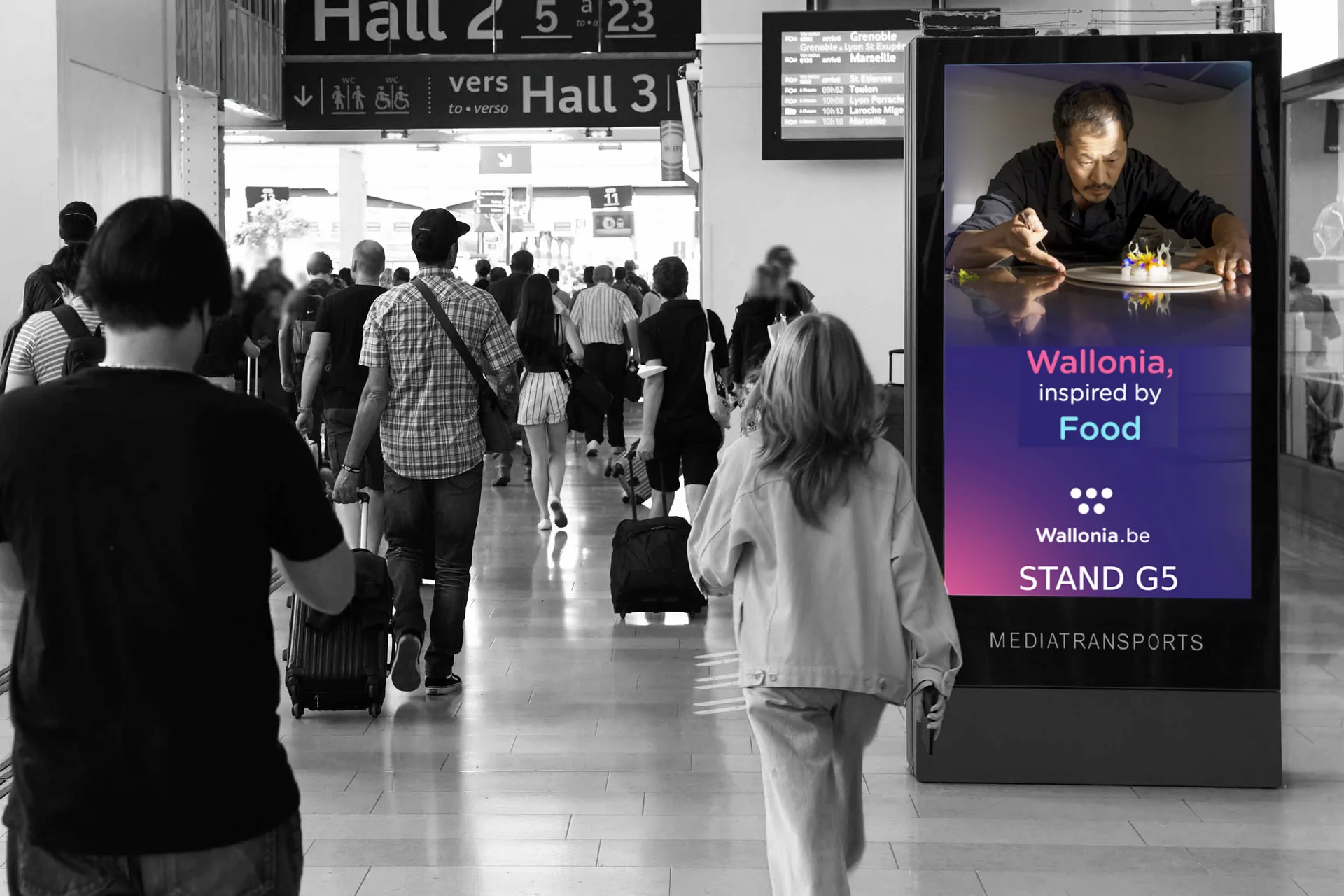
Let’s take a screen in a shopping mall:
-
Average traffic: 1,000 people/hour
-
Multiplier: 3
-
1-hour campaign, 1 play every 2 minutes = 30 plays
-
Potential impressions: 30 x 3 = 90
-
Estimated real visibility (VAI 70%): 63 effective impressions
“The multiplier is crucial for calculating ROI. The same budget can have a very different impact depending on location and timing.” — 💬 glooh Team
Implications for Advertisers
Strategic Choices
-
Large screens: high impact (branding)
-
Targeted screens: engagement and performance
Budget and ROI
- Premium placements can have very favorable CPMs despite higher per-play cost
Best Practices
-
Understand the multiplier for each screen
-
Consider hourly traffic fluctuations
-
Combine screen types
-
Validate audiences with reliable methods
Want to try DOOH with glooh?
👉 Simulate the cost and reach of your DOOH campaign for free
For more: