Recycled, not remade
We version your existing content for screens (every ratio, every format) without altering the creative and without new asks on your team. The gold you already produced is the raw material.
SocialDOOH: social to screens
SocialDOOH is our name for one move: taking the content you already made for social and putting it on digital out-of-home (DOOH) screens - the ones in streets, malls and stations - while it still carries.
Adopted by teams across Europe


Brands and teams with an active content engine: a social calendar that ships every week, creators, campaigns that perform online, and nothing planned for the physical world.
The post that carried your launch had the lifespan of a feed refresh. Producing separate creative for outdoor is a second budget and a second timeline, so the street never happens, and the neighborhood around your own store never sees the work your followers loved.
We version your existing content for screens (every ratio, every format) without altering the creative and without new asks on your team. The gold you already produced is the raw material.
Approved content reaches the screens in under 120 seconds. A post that works on Tuesday can be on the street Tuesday: the same reflex you have online, pointed at the neighborhood.
On screen, your content gets guaranteed airtime on a corner people pass daily: seen, and seen again. Repetition in one place builds the memorization a feed never gives you.
Every one of these already exists in your feed, your product catalogue or your inbox. Pick one and see what it becomes on a screen two streets from your door.
What you already publish
Analyzed and versioned
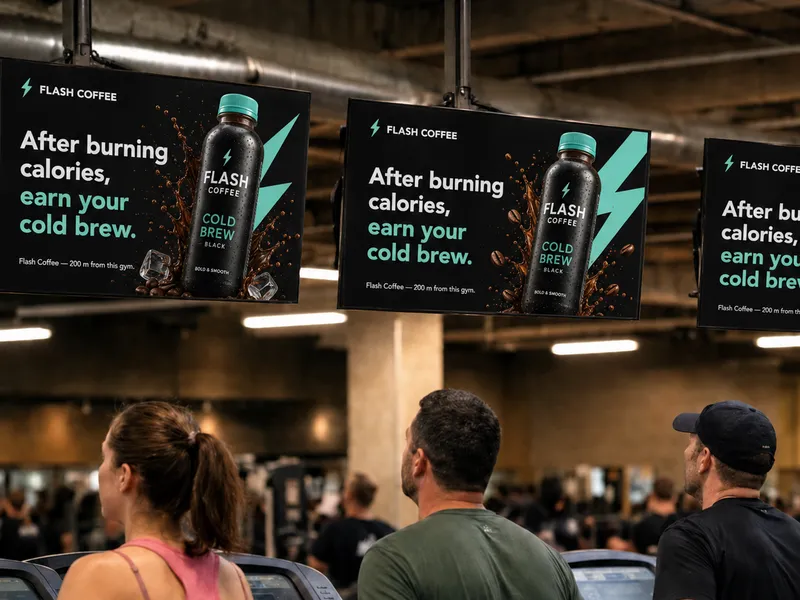
Cold brew, faster than you.
Flash Coffee, 200 m from this gym.
Cropped to every screen ratio, the hook moved to the first frame, the hashtag replaced by the distance to your door.
Get your Flash Coffee here!
€0.99 until 2 pm, aisle 4.
Plugged into the product feed: price, stock and deadline update on screen without a new export.
"Best cold brew in the neighborhood."
Marie, regular at the Flagey store.
Rights checked, framed in the brand template, and shown on the screens nearest the store the review names.
4.8 out of 5, from 1,240 people near you.
Ratings refresh daily.
Read from the live source, so the number on the street is never older than the number online.
28°C. Iced, obviously.
Playing while it stays above 25°C.
The creative activates on a condition instead of a calendar: the campaign speaks about today, every day.
We are hiring baristas. 10 min from here.
Scan to apply. Off the screen when the role is filled.
Synced to the vacancy feed: the screen fills and empties with the roles, with no one touching a media plan.
The lift lands on every channel
Social
The same creative, primed offline: the feed works against a brand people have already seen this week.
Search & web
Neighborhood presence turns into branded search and direct visits during the broadcast window.
Store traffic
The last screen carries the distance, the price and the deadline: the walk-in argument.
Why it sticks
A feed is built for volume and forgetting. A screen on a corner is built for the opposite, and the research on what people actually remember points at three things you already control.
Memory is built by repetition in a stable place, not by one large number of impressions spread thin. Guaranteed airtime on the screens your audience passes daily is what turns a campaign into something they can name a week later.
A poster that never changes stops being read after a few passes. Versions that evolve across the run, by day, by weather, by what is left in stock, keep earning attention instead of spending it. Neuro research measures the gap, and it widens as the week goes on.
Reading time on the street is a couple of seconds. Your social crops usually already respect that discipline, which is exactly why they travel well: one idea, one image, one thing to do next.
The point of SocialDOOH is that it costs your team nothing they have not already spent. What we need is access to work that exists.
Rights first: user content is only broadcast with the creator’s permission, and we would rather drop a strong asset than run one we cannot clear.
A folder, a feed, or your ad account. We version what is in it for every screen ratio without touching the idea, the typography or the colours you signed off.
Product catalogue, store locator, reviews, opening roles, live figures. Anything with a stable source can drive the part of the creative that should never be out of date.
Your stores, your venues, the neighborhoods you actually serve. That is what turns a good post into a message with a distance on it.
Independent neuroscience research on out-of-home creative, quoted because it explains the mechanism we build around.
Sources: Neuro-Insight for QMS (30 creatives across 15 categories) and OAAA / Nielsen. Industry evidence about the medium, not a glooh result.
From an independent artist’s Instagram story to a venue’s weekly programme: same move, different scale.
Real campaigns
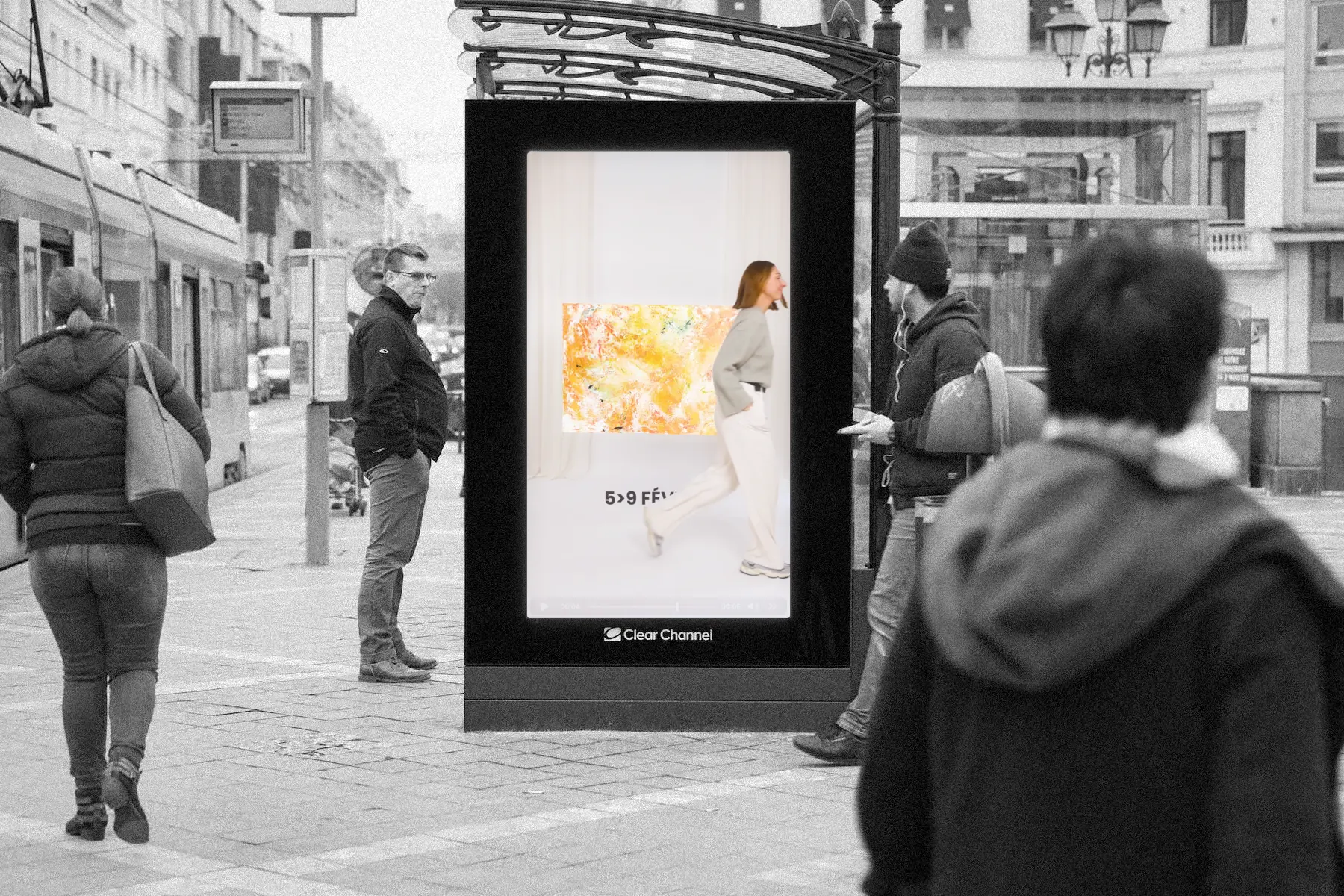
All case studies → #SocialDOOH: When Digital Art Comes to Life in the City
20 strategic screens · 7 campaign days · +40,000 impressions
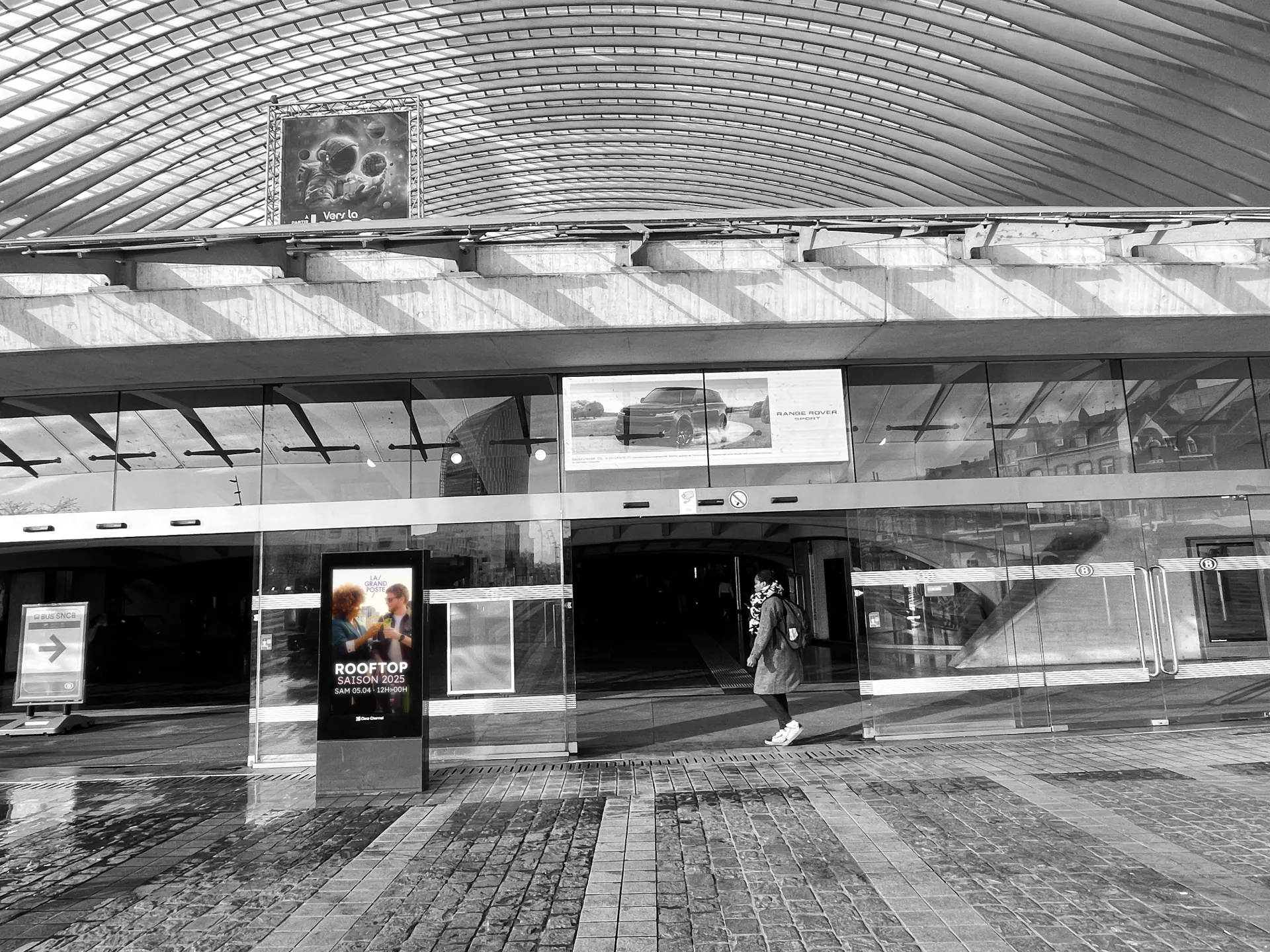
#SocialDOOH: When Liege's Trendiest Rooftop Takes Over the City
37 strategic screens · 13 campaign days · +165,263 impressions
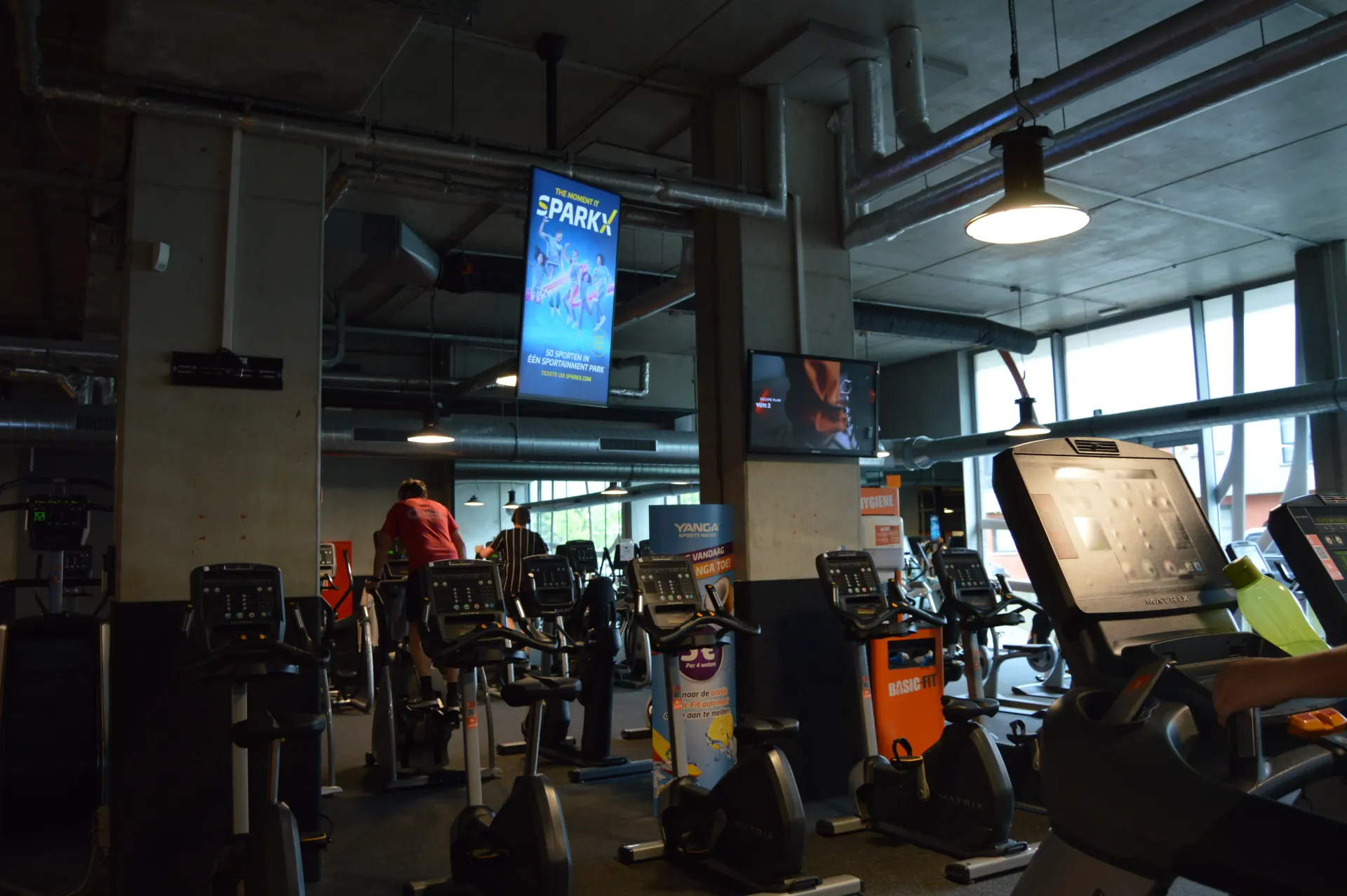
SparkX launches digital display campaign for new activity center
Campaign templates
All templates →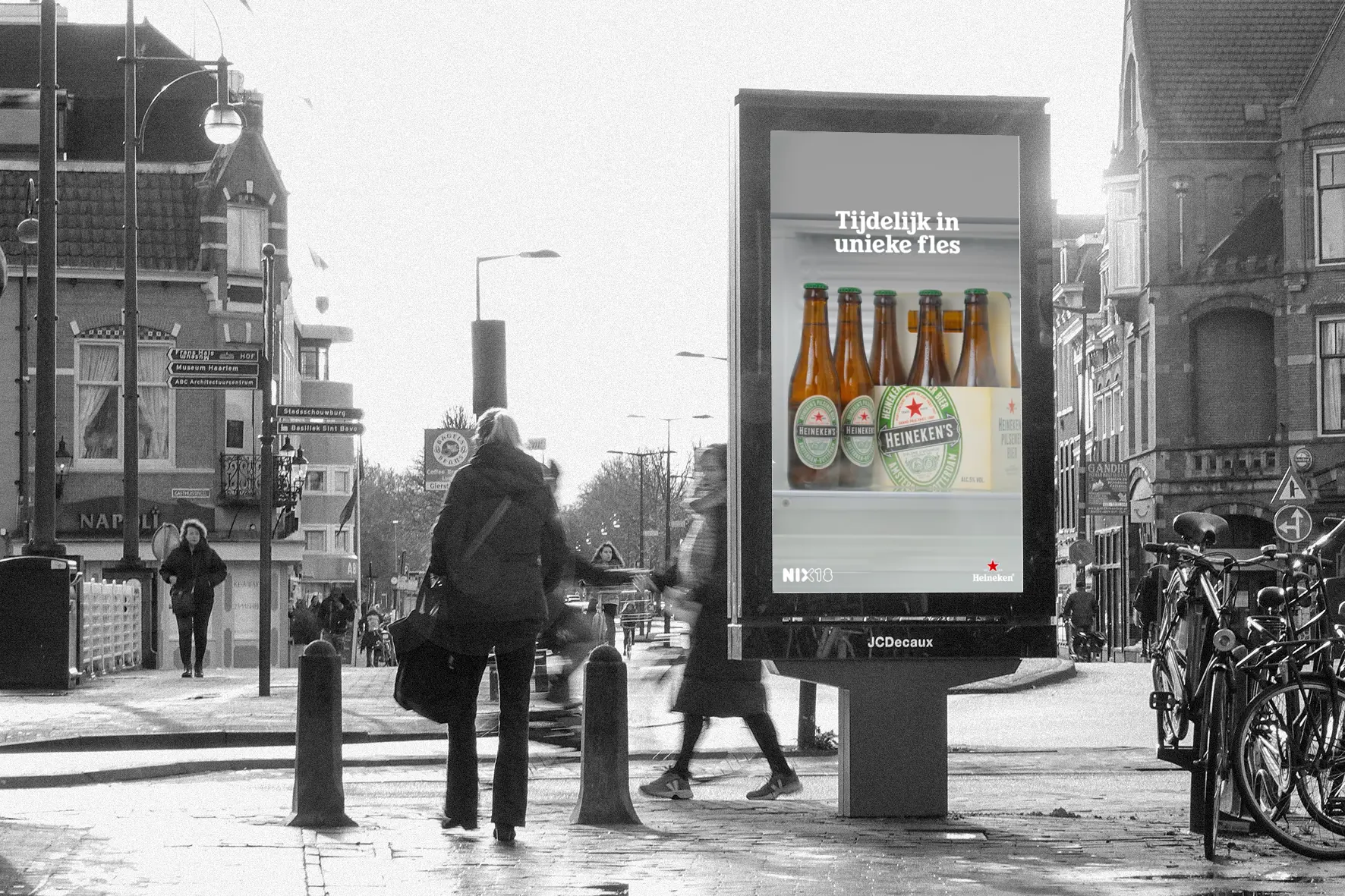
Live social wall from Instagram/TikTok content on DOOH screens.
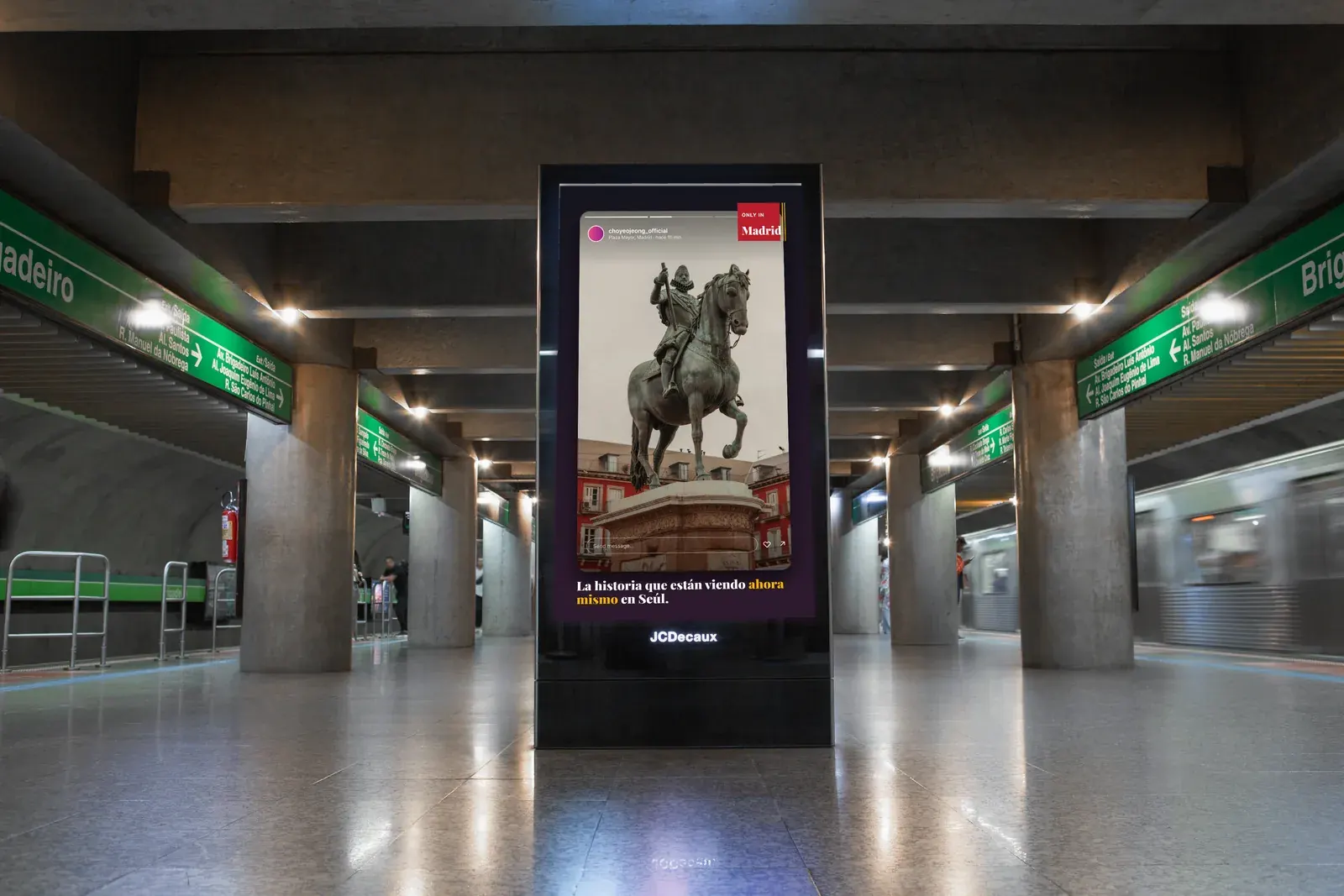
When an ambassador posts from the city, their content is automatically projected on DOOH screens in their home market: the story becomes the billboard.
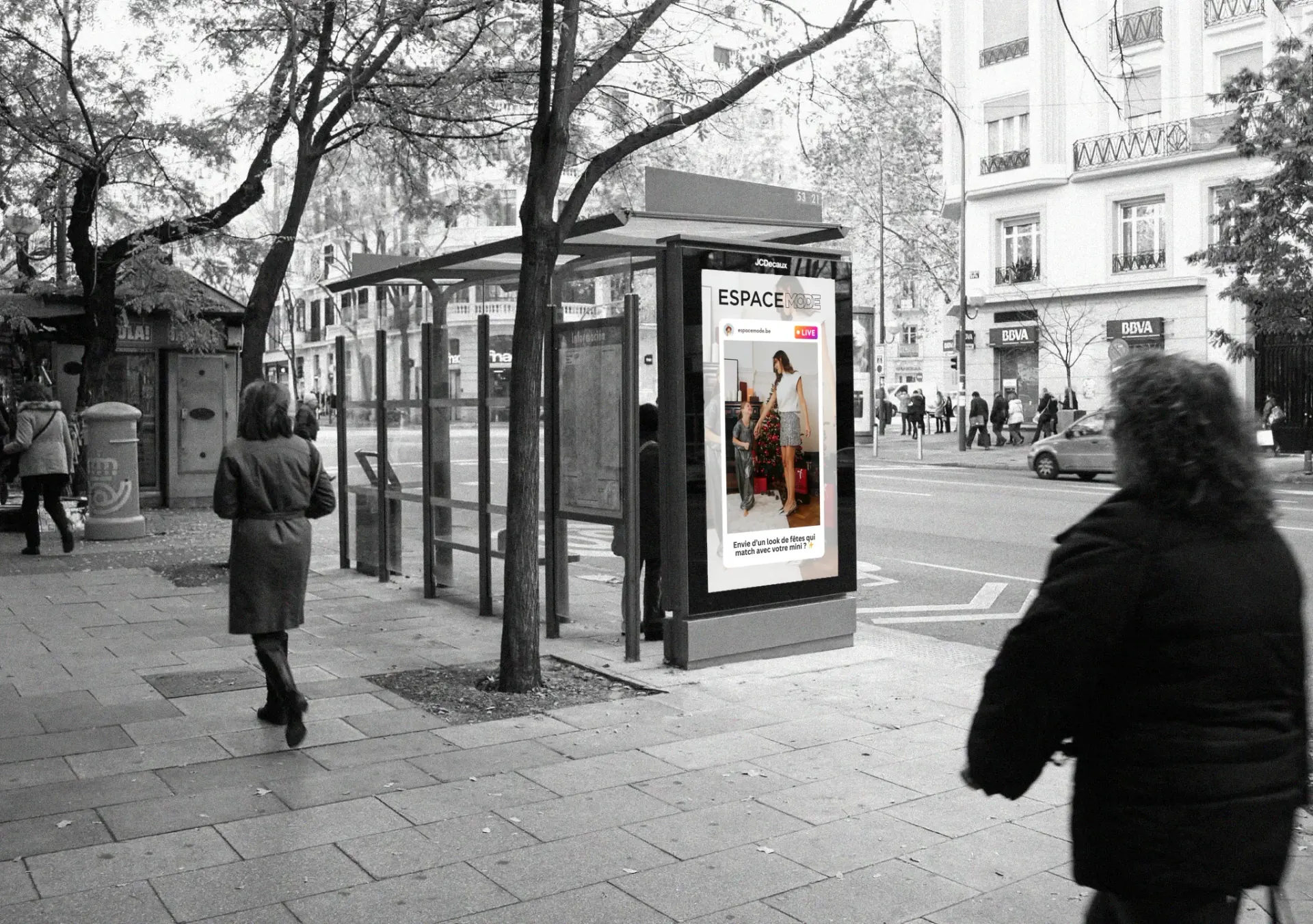
Instagram look content turned into a street-facing editorial fashion poster.
No. That is the whole idea. We version what you already approved for every screen ratio, without altering the creative and without a new brief for your team. If you have an active social calendar, you already have the raw material.
Vertical is closer to a street screen than to a TV, so it usually travels better than landscape brand film. We re-crop for each ratio, move the hook into the first frame, and replace anything that only makes sense in a feed, like a hashtag, with something that makes sense on a corner, like the distance to your door.
Only with the creator’s permission. We check rights before anything user-made goes on a screen, and we would rather drop a strong asset than run one we cannot clear.
Approved content reaches the screens in under 120 seconds. That is the point of the channel: a post that works on Tuesday can be on the street on Tuesday, with the same reflex you already have online.
From the content you already have to the screens in your neighborhood, in minutes, not weeks.