Guides & articles
Best Ads From the Paris 2024 Olympics: What to Steal
Best ads from the Paris 2024 Olympics, torn down: what Samsung, WWF, Coca-Cola, Intersport and LVMH did right and how to reuse each lesson on local screens.
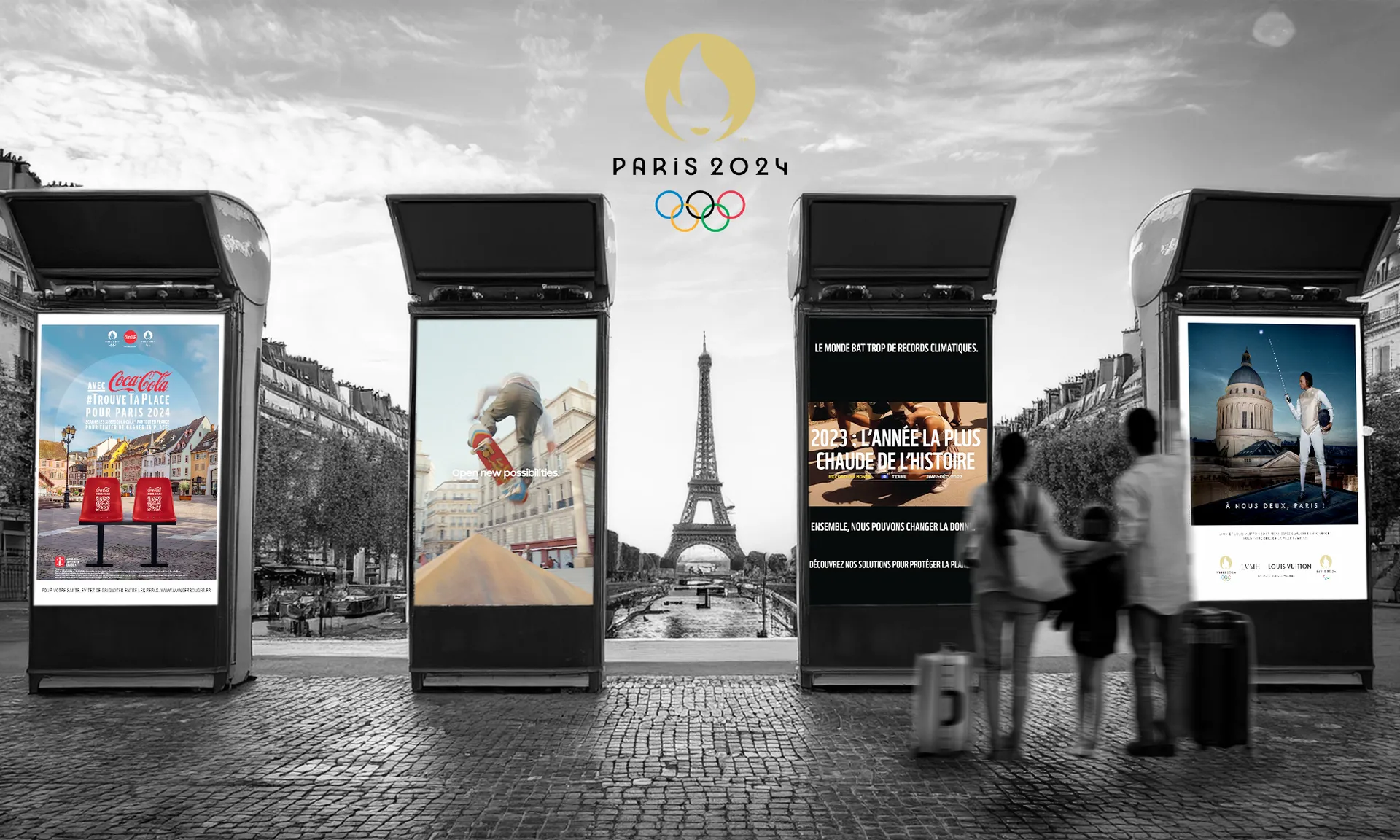
The best ads from the Paris 2024 Olympics had one thing in common: they caught the Olympic spirit without letting go of the brand. Five campaigns still stand out: Samsung’s “Open always wins”, WWF’s “Records not to be broken”, Coca-Cola’s #FindYourPlace, Intersport’s “Marathon for All” and LVMH’s “Paris, Here We Come!”.
This article is a teardown, not a highlight reel. For each campaign, we look at what ran, why it worked, and the lesson advertisers can still steal today: a creative principle, a timing play, or a way of using place. Every one of those lessons translates to digital out-of-home (DOOH: screens in streets, malls and stations), at the scale of your own city rather than the Champs-Élysées.
You do not need an Olympic budget for any of it. You need one clear idea, the right moment, and screens where your audience actually walks past.
What made the best Paris 2024 Olympics ads work?
Short answer: each campaign pulled hard on a single lever.
- Samsung compressed a brand belief into three words that survived every format.
- WWF borrowed the timing and codes of the Games to make the opposite point.
- Coca-Cola turned bottles and posters into a game with QR codes.
- Intersport used humour and empathy to talk to Parisians about their own city.
- LVMH made Paris itself the creative.
One idea, a borrowed moment, an interaction, a place. Those are the four levers this teardown keeps coming back to, with a “what to steal” note on each campaign.
Samsung “Open always wins”: how far can one idea stretch?
The “Open always wins” campaign was created for Samsung by the advertising agency BBH. It features Samsung Galaxy team skateboarder Aurélien Giraud (France), Paralympic sprinter Johannes Floors (Germany) and breakdancer Sarah Bee (France), showing how staying open turns failure into new possibilities.
The central message: every setback opens the way to something further. The athletes are not aiming at the finish line but past it. The slogan “Open always wins” carries that whole idea in three words, and the film closes on Samsung’s role as a sponsor of the Paris 2024 Olympic Games.
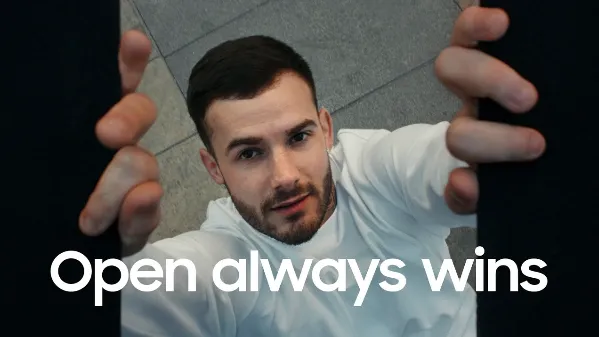
Why it worked:
- A universal theme. Turning failure into progress resonates far beyond the Games themselves.
- A real fit with Olympic values. Self-transcendence and openness connect the brand to the event without feeling bolted on.
- A slogan that does the work. “Open always wins” is short, memorable, and states the brand’s belief on its own.
- Images that carry the message. The film reads as one continuous visual argument, not a voiceover with pictures.
What to steal: your best social video is already outdoor creative
Samsung also cut the film into YouTube Shorts:
Look at that format again: vertical, a few seconds long, readable with the sound off. That is a DOOH spec sheet.
The lesson is compression. When one idea fits in three words and one strong image, it survives every cut-down, from a 90-second film to a 10-second screen loop. Do you have vertical videos that already perform on your channel or a client’s? Then you already have outdoor creative. With glooh, you can give that content a second life on screens in the neighbourhoods where your audience lives, without reshooting anything.
WWF “Records not to be broken”: why does hijacking the moment work?
The “Records not to be broken” campaign was created by WWF and produced by the agency TRY for the Paris 2024 Olympics. Launched on 23 July 2024, it uses a film narrated by Nelson Monfort, the French sports commentator whose voice a whole generation associates with the Games, to run through the alarming climate records of 2023.
While the Olympics celebrate records, WWF reminded everyone that some records, deforestation, CO2 emissions, species extinction, should never be broken. The film alternates scenes of sporting celebration with images of environmental destruction, and the contrast does the arguing.
Why it worked:
- A subversion of Olympic codes. Everyone expected records to be celebrated; WWF inverted the expectation, and the inversion is what grabs attention.
- The right message at the right moment. In the middle of Olympic euphoria, the campaign put climate urgency back in view without preaching.
- Contrast as visual grammar. Athletes against destruction: the emotional effect needs no explanation.
- A slogan that flips the frame. “Records not to be broken” is instantly clear and easy to retain.
- A familiar voice. Nelson Monfort anchors the message in sporting culture and adds an unsettling layer of nostalgia.
What to steal: borrow attention you could never buy
You cannot buy the attention of an Olympics. You can borrow it. WWF took a moment everyone was already watching and turned its codes around; the media moment did half the creative work.
The second lesson is very specific to street screens: the campaign works with the sound off. WWF adapted stills from the film into poster visuals for different locations (shown in WWF’s press release): one strong image, one short line laid over it. That is the entire grammar of DOOH.
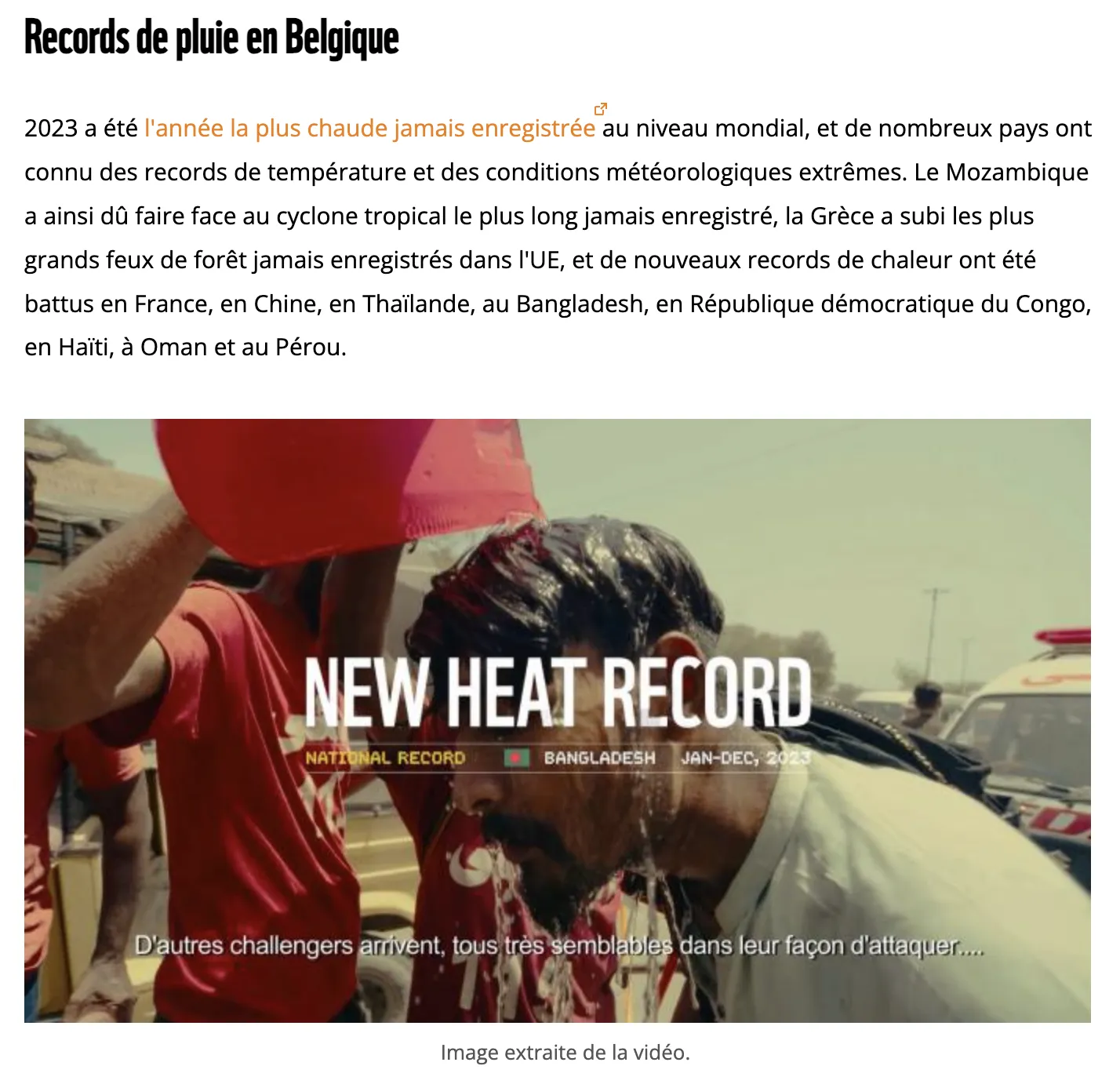
The local translation: pick the moments your city is already living through, a marathon, a fair, a derby, a heatwave, and plan your screens for those exact days and places. Contrast plus timing works at neighbourhood scale too.
Coca-Cola #FindYourPlace: how do you make a poster interactive?
Coca-Cola launched #FindYourPlace for the Paris 2024 Olympic and Paralympic Games, designed by the creative agency Wieden+Kennedy. Consumers joined a modern treasure hunt by scanning QR codes on the brand’s products for a chance to win tickets to events.
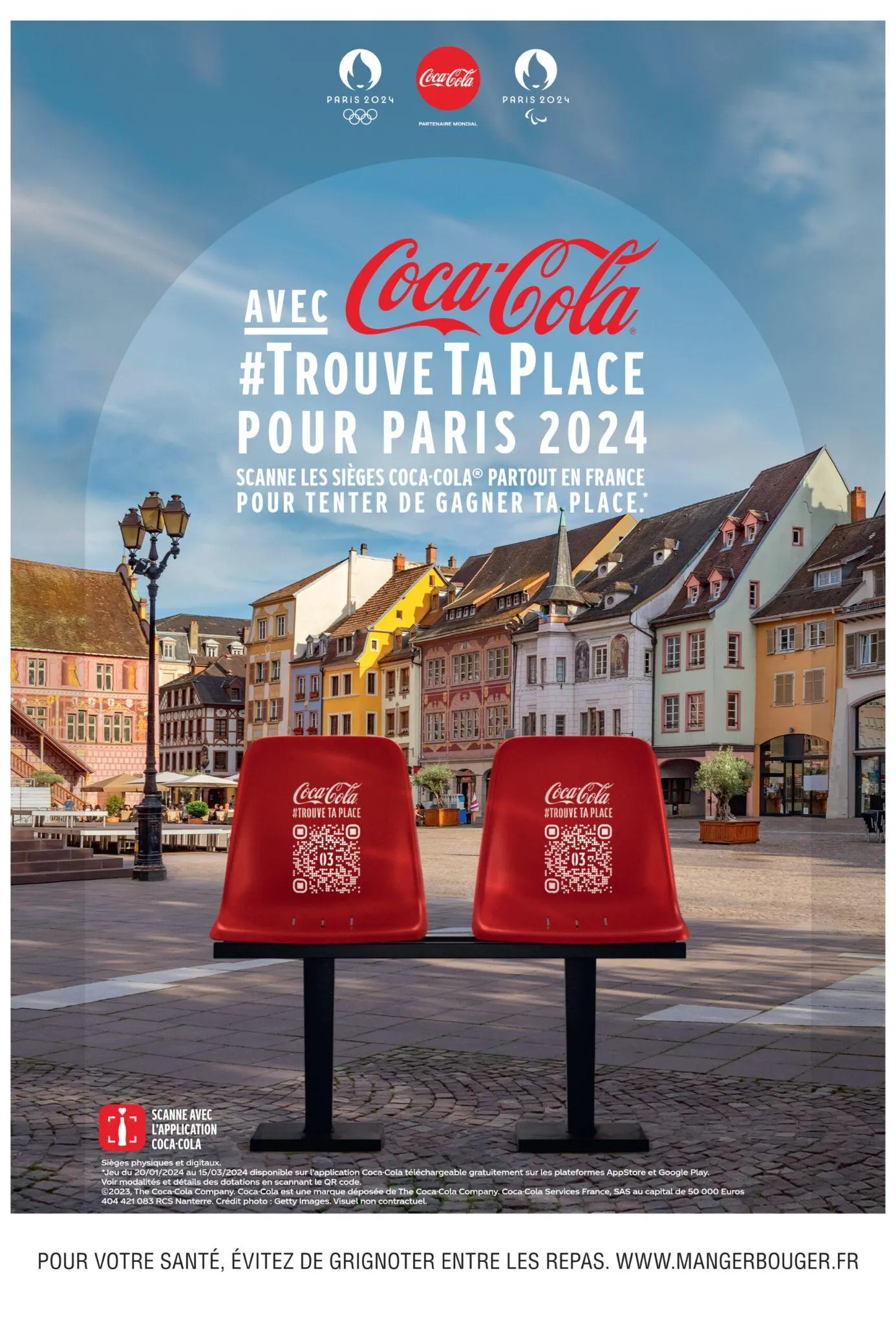
The campaign celebrates the inclusive spirit of the Games: athlete, supporter or volunteer, everyone has a place in the collective energy of Paris 2024. The film shows festive, intimate moments across the city’s neighbourhoods, streets, cafés and stadiums, with the Coca-Cola bottle as the connecting symbol.
Why it worked:
- A unifying promise. “Find your place” invites everyone in, which is exactly the right register for a global event.
- Authentic diversity. Real profiles, real places; the representation matches the message instead of decorating it.
- Local anchoring with global reach. Parisian life scenes create an emotional link for locals and visitors alike.
- A mechanic, not just a message. The QR code turns a passive audience into participants, and every scan is a measurable action.
What to steal: a QR code turns a screen into a door
A screen with a QR code is no longer just visibility, it is an entry point: to a game, an offer, a signup, a store visit. Once someone scans, the brand can capture data, collect feedback in real time, or trigger an instant offer. The physical display starts a digital interaction, and suddenly your outdoor campaign has a click-through.
With glooh, the setup is direct: pick DOOH locations where your audience has time to scan (venues with dwell time beat fast roads), add a QR code to your creative using the platform’s tools, or import a design made in Canva or any other tool. Curious what an interactive campaign like this would look like around your own locations? Plan your campaign (free).
Intersport “Marathon for All”: what does local empathy buy you?
Intersport marked its return to Paris with a campaign built on humour and an inspiring message, created with the agency Marystone and titled “Marathon for All”. It speaks directly to the challenges Parisians expected to face during the 2024 Games, while reminding everyone that sport is not reserved for an elite.
The campaign coincided with Intersport’s acquisition of Go Sport and put the brand’s newly opened Paris stores in the spotlight. The film follows children, seniors, amateurs and seasoned athletes training for a fictional marathon on the sidelines of the Games, in urban parks and neighbourhood alleys, each at their own pace. You can see the campaign on Marystone’s site.
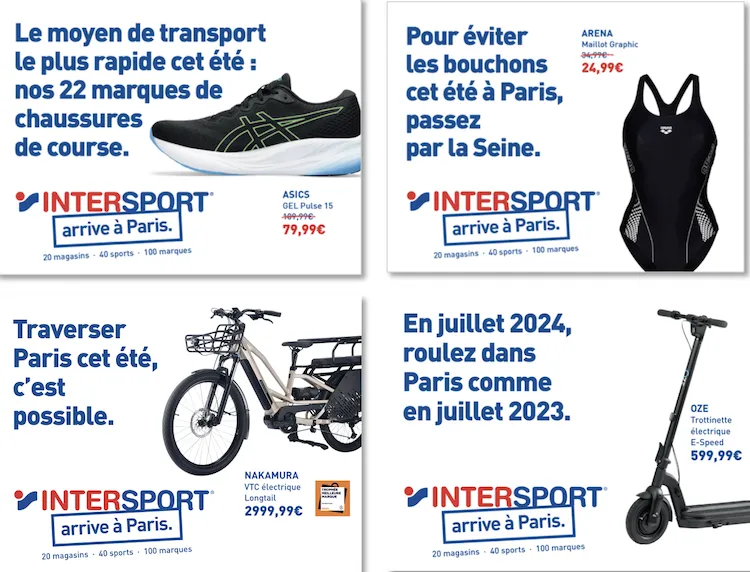
Why it worked:
- The inclusive spirit of sport, made concrete. A “marathon for all” says passion beats performance, a message that lands especially well during the Olympics.
- Everyday people, authentic storytelling. Ordinary Parisians enjoying training connect far more directly than another montage of champions.
- A smart repositioning. After the Go Sport acquisition, the campaign frames Intersport as the accessible partner for every kind of athlete.
- A genuinely local touch. Typical Parisian neighbourhoods anchor the message in the audience’s real streets while riding the global momentum of the Games.
What to steal: talk about their city, then show up in it
Intersport’s insight was empathy with a local reality: Parisians bracing for Olympic disruption. The humour works because the brand talks about the audience’s life, not about itself.
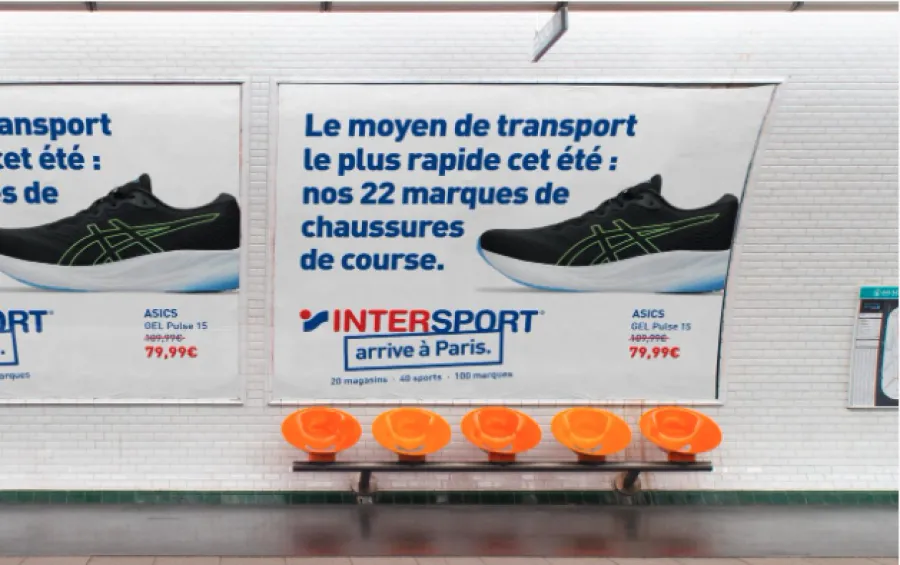
The second half of the lesson is media, not creative. A store opening is a geographic story, so the plan should be geographic too: screens around the new store, near the parks, gyms and shopping centres where the people who could actually walk in pass every day. On glooh, that means picking screens neighbourhood by neighbourhood rather than buying a whole city, and pairing them with an invitation a passer-by can act on immediately: a route map, a challenge, an opening offer behind a QR code.
LVMH “Paris, Here We Come!”: what does owning a place look like?
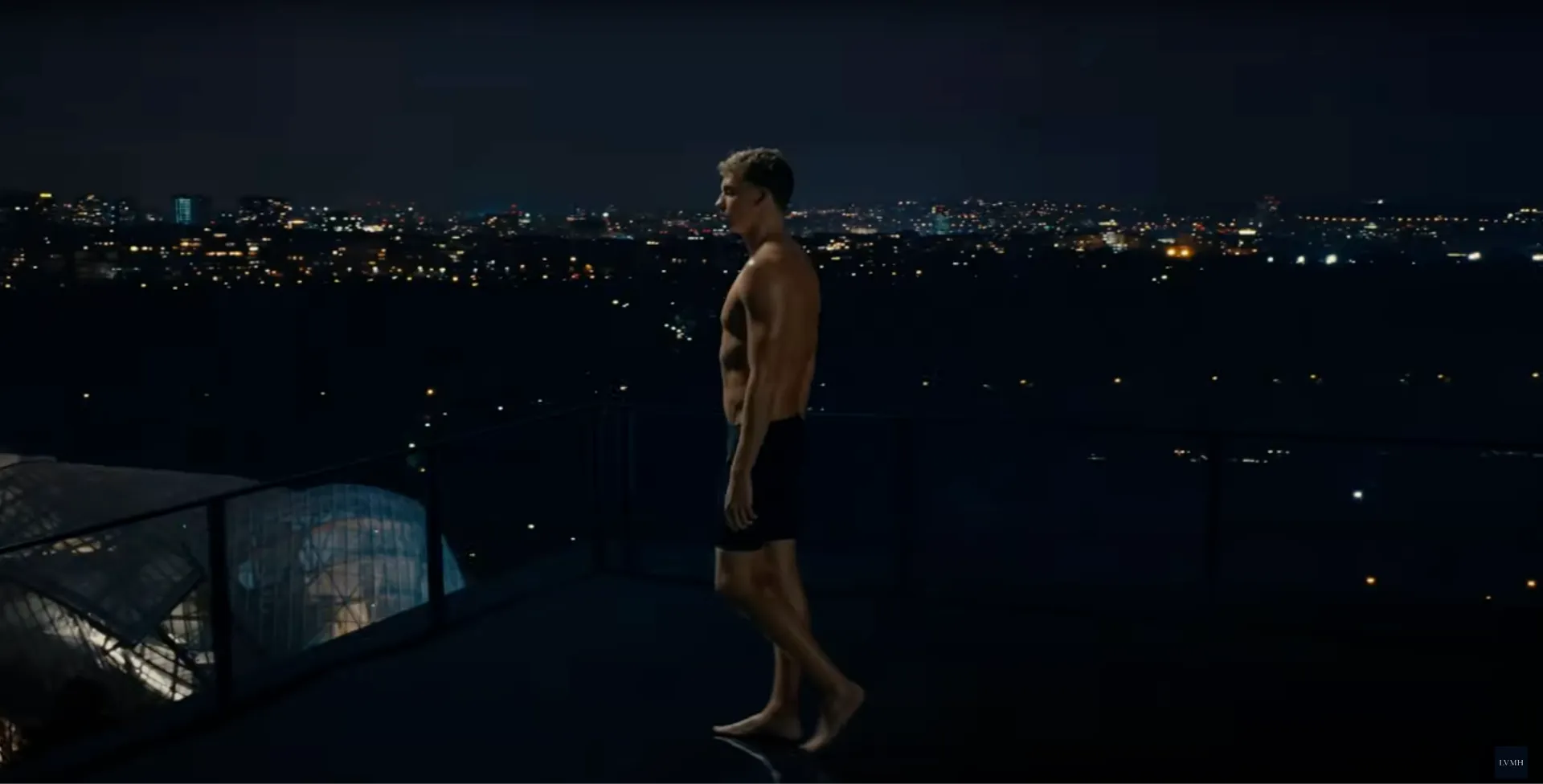
As a premium partner of the Games, LVMH launched “Paris, Here We Come!”, orchestrated by the agency HAVAS PLAY. The film shows athletes training in iconic Parisian locations, Place Vendôme, the Champs-Élysées, the banks of the Seine, interleaved with haute couture moments where LVMH houses like Louis Vuitton, Dior and Givenchy dress the athletes: art, fashion and sport as one continuous scene.
Why it worked:
- A celebration of French excellence. Luxury and sporting performance meet in a refined, ambitious vision of Paris 2024.
- Heritage as backdrop. Mythical Parisian locations reinforce the city’s status as the capital of luxury and create real emotional attachment.
- An inspiring, universal line. “Paris, Here We Come!” speaks to athletes, creators and anyone who wants their moment on a big stage.
- Coherent positioning. Associating with the Games reaffirms LVMH’s role as ambassador of French savoir-faire.
What to steal: place is creative material
LVMH did not use Paris as a backdrop; Paris is the co-star. That is the transferable idea: the place where your audience lives can carry your message.
You do not need Place Vendôme. Your landmark is the market square, the station forecourt, the high street your customers cross daily. Build creative that shows or names that exact place, then run it on the screens standing in it. When what is on the screen matches what is around the screen, the ad stops feeling like an interruption and starts feeling like part of the street. On glooh, you can create visuals from templates or import your own designs, and match each one to the locations where it will mean the most.
What can advertisers still steal from Paris 2024?
The Games ended. The levers did not. Five lessons from this teardown that work on any local campaign:
- One idea per screen. If it does not survive compression into a few words and one image, it is not ready for the street.
- Borrow moments you could never buy. Plan screens around the events your city already watches.
- Make it interactive. A QR code turns visibility into measurable participation.
- Anchor in the neighbourhood. Show up where your audience actually lives, near the places your message refers to.
- Recycle what already performs. Strong vertical social content is one step away from being DOOH creative.
These campaigns exist because visionary brands trusted agencies like BBH, TRY, Wieden+Kennedy, Marystone and HAVAS PLAY to deliver exceptional work, and they are far from the only ones who raised the creative bar that summer.
If you have a moment of your own coming up, an opening, a local event, a seasonal peak, you can test these levers at your own scale. Plan your campaign (free) and see what it looks like on the screens your customers walk past.
FAQ: the best ads of the Paris 2024 Olympics
Which brands had the best ads at the Paris 2024 Olympics?
The campaigns most often cited, and the ones analysed here, are Samsung’s “Open always wins”, WWF’s “Records not to be broken”, Coca-Cola’s #FindYourPlace, Intersport’s “Marathon for All” and LVMH’s “Paris, Here We Come!”. Each stood out for a different reason: message compression, timing, interactivity, local empathy and use of place.
Which agencies created these Paris 2024 campaigns?
BBH created “Open always wins” for Samsung, TRY produced “Records not to be broken” for WWF, Wieden+Kennedy designed #FindYourPlace for Coca-Cola, Marystone created “Marathon for All” for Intersport, and HAVAS PLAY orchestrated “Paris, Here We Come!” for LVMH.
Can a local brand reuse these ideas without an Olympic budget?
Yes. The principles are budget-independent: one clear idea, a borrowed local moment, a QR code for interaction, creative anchored in a real place. On DOOH screens, they apply at the scale of a neighbourhood, a set of dates and the content a brand already has.
Do these lessons still apply now the Games are over?
Yes, because none of them depend on the Olympics. Big shared moments come back constantly: tournaments, marathons, fairs, seasonal peaks. The mechanics these campaigns proved, compression, timing, interaction and place, work on whichever moment your audience watches next.