Guides & articles
Advertising regulations in France: the guide for foreign advertisers
Permitted sectors, mandatory legal mentions and their size, French language rules, ARPP clearance: the framework to know before you submit a creative in France.
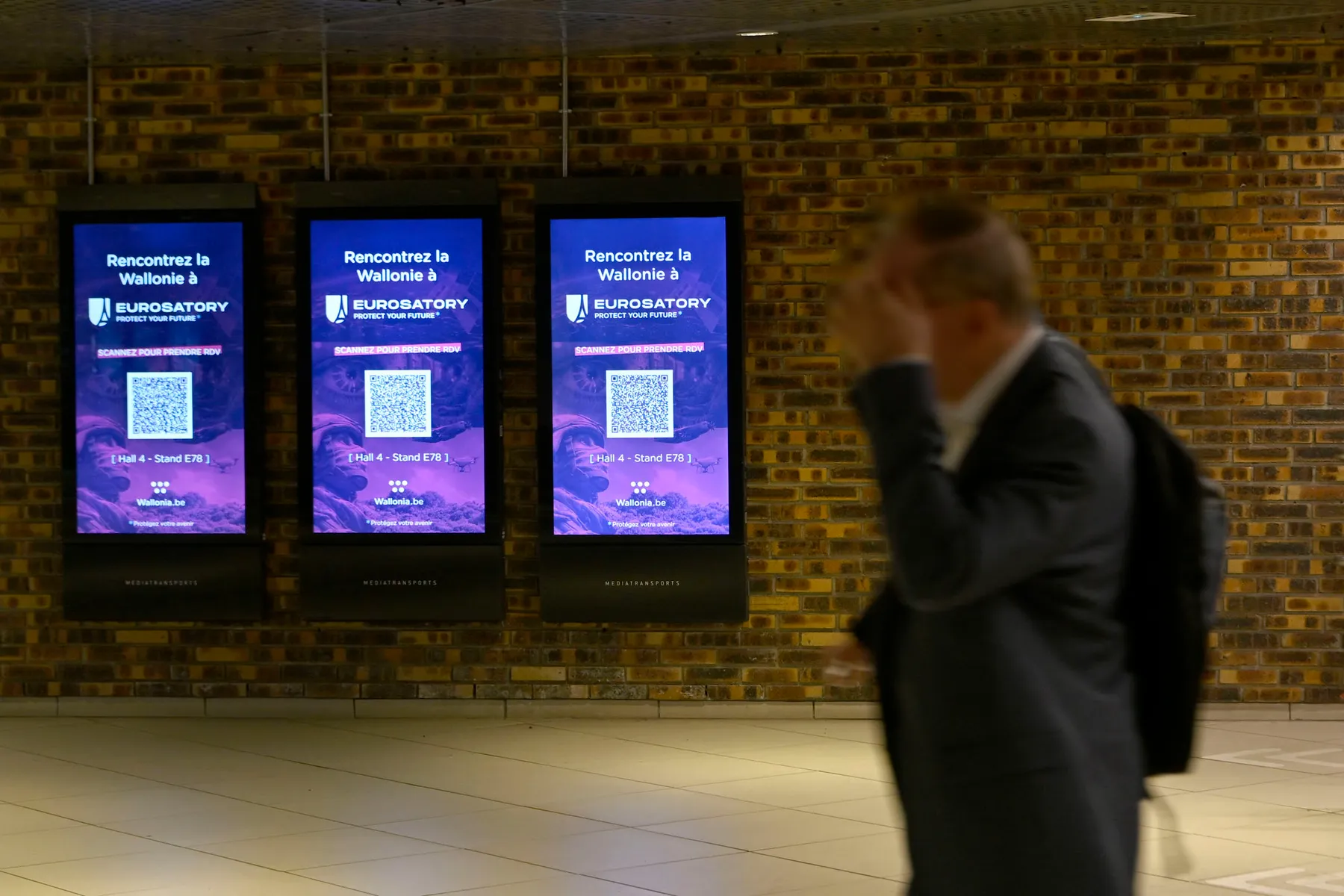
You are preparing a campaign in France from London, Brussels, Madrid or New York. The creative was signed off at home, it is clear, it looks good. And the French media owner rejects it.
It is almost never a matter of taste. France stacks three layers of rules that many markets do not have: the law, professional self-regulation, and the terms of each individual media owner. A creative can be perfectly legal and still be refused, because it fails the second or third layer.
This guide describes that framework from a foreign advertiser’s point of view: what you are allowed to talk about, what triggers a mandatory legal mention, how large that mention has to be, how the French language requirement applies to your English headlines, and how clearance actually works in practice.
⚠️ This article is a practical guide, not legal advice. It describes the framework as it stands on 22 August 2026, in a field that moves quickly. Final responsibility for what gets broadcast lies with the advertiser, and with the advertiser alone. For any campaign with real exposure (regulated sector, significant budget, quantified claim), have your creative reviewed by your legal counsel and, where relevant, by the ARPP before it runs.
Who decides what: the six players to know
Before talking about rules, you need to understand who enforces them. This is the part foreign advertisers underestimate most.
1. You, the advertiser. You are legally responsible for the message that runs, including when the agency, the media owner or the platform let it through. No intermediate approval transfers that responsibility.
2. The ARPP (Autorité de Régulation Professionnelle de la Publicité). France’s advertising self-regulatory organisation. It writes the ethical recommendations and issues pre-clearance opinions. Key point: clearance is mandatory for television and on-demand audiovisual services (SMAd), but optional for every other medium, including outdoor and DOOH. Optional does not mean pointless: in practice it is the fastest way to de-risk a sensitive creative.
3. The media owner (régie). This is the real operational filter in outdoor and DOOH. Each media owner applies its own terms and conditions, often stricter than the law, and refuses anything that looks risky to it. This is where most foreign creatives get bounced.
4. The enforcement authorities. The DGCCRF (misleading commercial practices), the ANJ (gambling), ARCOM (audiovisual), and the regional DDPP. They act after the fact, and they can sanction.
5. The mayor and the local advertising bylaw (RLP). In outdoor advertising, the municipality sets rules on format, siting and operating hours that come on top of national law. No two French cities have the same RLP.
6. The JDP (Jury de Déontologie Publicitaire). The complaints body, post-broadcast. It imposes no financial penalty, but it publishes its rulings, and an adverse ruling is a public and durably indexed reputational incident.
What can you advertise?
Three categories, to be handled very differently.
Unrestricted sectors
Most advertisers sit here: retail, services, tech, B2B, recruitment, culture, events, tourism, real estate, automotive (with mandatory mentions, see below), food retail. You communicate freely, subject to general law: no misleading commercial practice, no discrimination, respect for human dignity, respect for image rights and copyright in your visuals.
The classic trap here is not sectoral, it is evidential. Any quantified or superlative claim (“no. 1”, “the fastest”, “up to 40% savings”, “100% natural”) must be provable on request, from a verifiable source. In France the burden of proof sits with the advertiser.
Restricted sectors
You can advertise, but the content of the message is constrained and one or more mentions are mandatory.
- Alcoholic beverages: very tightly framed, see the dedicated section below.
- Manufactured food products and drinks with added sugar, salt or sweeteners: health message, see the dedicated section.
- Gambling and betting: an ANJ-licensed operator is required, plus a warning message and strict protection of minors.
- Consumer credit and financial products: mandatory mentions with a specific sizing rule.
- Motor vehicles: mobility message and CO2 label are mandatory.
- Health, medical devices, food supplements: health claims are tightly controlled by EU law.
- Environmental claims: see the greenwashing section.
Prohibited sectors
No creative workaround exists.
- Tobacco and vaping products: propaganda and advertising, direct or indirect, are prohibited. That includes indirect advertising through an associated brand.
- Prescription-only medicines: advertising to the general public is prohibited.
- Weapons and ammunition: prohibited in advertising to the general public.
- Fossil fuels: since 22 August 2022, the Climate and Resilience Act prohibits advertising for the sale or promotion of fossil fuels, except fuels made up of at least 50% renewable energy.
- Gambling operators not licensed in France: prohibited, even if the operator holds a licence elsewhere in the European Union.
💡 If you are a foreign operator in a regulated sector, check your status in France first, before you even think about the creative. A Maltese gaming licence or a financial authorisation obtained in another member state does not automatically give you the right to advertise in France.
The rule everyone forgets: the French language
This is the number one cause of rejection for a foreign advertiser, and the easiest to fix.
The Toubon Act (law of 4 August 1994) requires the use of French in advertising. It does not ban English: it requires that any foreign-language term be accompanied by a French translation.
What has to be translated, and what escapes the rule
Must be translated: headlines, slogans, brand signatures, claims, calls to action, and the legal mentions themselves.
Do not have to be translated: the name of the product or service as marketed under that name, and the trademark itself.
⚠️ The trademark exception is narrower than people assume. Under ARPP doctrine, a slogan, a signature or a logo must be translated as soon as it is used for advertising purposes, even where it is protected as a registered trademark. Having registered your English baseline does not exempt you from translating it.
How the asterisk works
The translation is delivered in practice through a reference mark, an asterisk or a number, placed both next to the foreign term and next to its translation.
The rules to respect:
- The translation must be as legible, audible or intelligible as the foreign-language version. That is the legal test, and it is a test of perception, not of millimetres.
- It does not have to be literal: it has to allow proper understanding of the terms used.
- The reference mark itself must be large enough to remain legible under normal reading conditions. An asterisk set in 4pt defeats the whole device.
- The translation must run horizontally, in a legible typeface, with sufficient contrast against the background.
- The translation does not have to match the original’s size exactly, but it must stay proportionate. A headline set in 200pt with a translation in 6pt will be treated as non-compliant.
Legal mentions: which ones, where, and at what size
This is the most frequent question, and the answer often surprises: for outdoor advertising, there is no minimum size expressed in millimetres or points.
The ARPP “Mentions et renvois” recommendation sets a contextual principle: character size must be chosen according to the format of the medium and the format of the ad, so that it can be read under normal conditions. For outdoor, the recommendation adds the criterion of the type of site. A mention that is legible on a 2 sq m bus-shelter panel at one metre is no longer legible on a large-format panel seen from a road.
Several sector-specific texts do, however, impose a precise percentage of surface. Those are the ones to know.
| Sector | Mention | Sizing rule |
|---|---|---|
| Food and drinks with added sugar or salt | One of the four health messages + www.mangerbouger.fr | On printed media: a reserved horizontal space covering at least 7% of the advertising surface |
| Motor vehicles | Mobility message + #SeDéplacerMoinsPolluer, plus the CO2 label | On print and fixed digital images: at least 7% of the advertising surface, in a dedicated horizontal space, separate from other mentions |
| Gambling | Warning message | Press: horizontal, at least 7% of the advertising space. TV and cinema: at least 7% of screen height |
| Alcohol | “L’abus d’alcool est dangereux pour la santé, à consommer avec modération” | No statutory percentage, but the mention must be clearly legible and the content of the creative is itself constrained |
| Consumer credit | “Un crédit vous engage et doit être remboursé. Vérifiez vos capacités de remboursement avant de vous engager.” | The reverse rule: this mention and the APR must appear in a larger type size than any other information about the financing terms, and within the main body of the ad |
Hold on to the general logic: contrast and legibility outrank raw size. The ARPP is explicit that where the background of the creative is not uniform, you must lay in a single-colour band contrasting with the characters. A white mention dropped onto a light photograph is non-compliant, whatever its size.
The “too fatty, too salty, too sugary” case: mind the scope
This is the best-known message, and the one foreign advertisers most often misread.
The four health messages, which must be rotated, are:
- “Pour votre santé, mangez au moins cinq fruits et légumes par jour” (for your health, eat at least five fruits and vegetables a day)
- “Pour votre santé, pratiquez une activité physique régulière” (for your health, take regular physical exercise)
- “Pour votre santé, évitez de manger trop gras, trop sucré, trop salé” (for your health, avoid eating too much fat, sugar or salt)
- “Pour votre santé, évitez de grignoter entre les repas” (for your health, avoid snacking between meals)
They apply to drinks with added sugar, salt or artificial sweeteners, and to manufactured food products.
The nuance that matters for DOOH
Article L2133-1 of the Public Health Code covers messages broadcast on television or radio, online public communication services, and printed matter and periodicals published by the producers or distributors of those products. The order of 27 February 2007 specifies, in article 4, that the 7% rule applies to messages carried on printed media.
In other words: classic outdoor and DOOH are not expressly named in the statutory scope of this obligation.
Do not conclude too quickly that you are in the clear. Three reasons to carry the message anyway:
- Many media owners require it contractually, independently of the law.
- The boundary between “outdoor” and “online public communication service” is blurred for certain connected setups, and the interpretation will not necessarily go your way.
- Omitting the message on a mainstream food creative invites an unfavourable reading in the event of an inspection or a complaint.
⚠️ An important point for advertisers who knew the old regime: the 1.5% levy that allowed you to buy your way out of the health message has been abolished by the 2020 Finance Act, for liabilities arising from 1 January 2020. There is no longer any buy-out option: when the message is due, it is due.
Alcohol: the exhaustive-content rule
If you are advertising an alcoholic drink, set your international brand platform aside. The Évin Act does not merely impose a mention: it defines an exhaustive list of what the advertising is allowed to contain.
Permitted: alcoholic strength by volume, origin, denomination, product composition, the name and address of the producer, agents and distributors, the production method, the terms of sale and the way the product is consumed.
Everything else falls outside the frame. In practice, any staging that glamorises consumption in a festive, sociable, high-performance or seductive context is prohibited. No group of friends clinking glasses, no sunny terrace, no story of social success.
The mention “L’abus d’alcool est dangereux pour la santé, à consommer avec modération” is mandatory, but it buys you nothing: adding the mention does not make lawful an ad whose content falls outside the exhaustive list. This is the sector’s most expensive mistake.
💡 What works in France: the product, the terroir, the craft, the raw material. A well-shot bottle and a stated origin will clear. A slice of life will not.
Environmental claims
Since the Climate and Resilience Act, greenwashing is treated as a misleading commercial practice, with the sanctions that go with it, which can reach up to 80% of the money spent on the campaign.
Two points to know:
- Carbon neutrality claims are prohibited in principle. That covers “carbon neutral”, but also “zero carbon”, “zero carbon footprint”, “climate neutral”, “fully offset”, “100% offset”. An exemption exists, but it is conditional on producing a full life-cycle emissions assessment, compliant with ISO 14067, and made publicly available.
- Every environmental claim must be proportionate and substantiated. “Eco-friendly”, “green”, “environmentally responsible” with no evidence and no defined scope are high-risk formulations.
Automotive: two cumulative obligations
Since 1 March 2022, any advertisement for a motor vehicle, whatever its powertrain (combustion, hybrid, electric or hydrogen), must carry:
1. A mobility message, chosen from three, together with the hashtag:
- “Pour les trajets courts, privilégiez la marche ou le vélo #SeDéplacerMoinsPolluer”
- “Pensez à covoiturer #SeDéplacerMoinsPolluer”
- “Au quotidien, prenez les transports en commun #SeDéplacerMoinsPolluer”
The three messages must rotate across the campaign as a whole, with a tolerance of plus or minus 10%. The hashtag must be reproduced identically.
2. The CO2 label, which must show all seven colour-coded arrows corresponding to the seven emission classes, with the vehicle’s own figure set inside the relevant arrow.
On print and fixed digital images, the message and hashtag pair must occupy at least 7% of the advertising surface, in a dedicated, easily identifiable horizontal space, separate from the other mandatory mentions. Financial advertising, recruitment, sponsorship and corporate communication are exempt.
Constraints specific to DOOH and outdoor
Beyond content, the medium imposes rules of its own.
Night switch-off. Illuminated advertising must be switched off between 1am and 6am across the whole country, under the decree of 5 October 2022. Exceptions cover installations within airport grounds and national-interest markets, and street furniture assigned to transport services during those services’ operating hours. Municipalities can impose stricter rules through their RLP.
Exposure time versus legibility. This is the structural constraint in DOOH. A slot typically runs 6 to 10 seconds. A legal mention designed for a magazine page becomes unreadable. The ARPP recommendation calls for particular attention to exposure time and character size in digital, and to scrolling speed where text scrolls.
Animation. On sites visible from a road, fast animation and flashing effects are to be avoided, for safety and distraction reasons.
The local RLP. Format, density, siting and operating hours vary from one municipality to the next. That is the media owner’s concern more than yours, but it shapes what is available to buy.
💡 Practical rule in DOOH: if your mandatory mention does not fit legibly inside the slot, the mention is not what you shrink, the headline is. A shorter message leaves room for a compliant mention. The creatives that fail are almost always the ones that tried to say everything.
How clearance actually works
Here is the realistic path from a foreign creative to a French screen.
Step 1: qualify your sector. Unrestricted, restricted or prohibited. That answer drives everything else. Do it before the creative work, not after.
Step 2: adapt the creative, do not translate it. This is the single most important piece of advice in this guide. An international creative translated word for word often fails, because the mentions were never designed into the layout. Reserve the space for the mention in the template, from the start.
Step 3: deal with the French language. English headlines, slogans and signatures: add the reference marks and the translations, proportionately sized.
Step 4: ask the ARPP for an opinion if the subject is sensitive. The step is optional outside television, but it is the safest way to settle a point of interpretation. The ARPP reviews roughly 160 messages a day in all-media pre-clearance. Build that lead time into your schedule rather than discovering it three days out.
Step 5: submit to the media owner. This is the filter that counts in practice. Expect one round of back-and-forth: for a first campaign in France that is the norm, not the exception.
Step 6: archive. Keep the creative as broadcast, the proof of broadcast, and the substantiation for your quantified claims. If there is an inspection or a complaint, that file is what protects you.
The pre-submission checklist
- Is my sector unrestricted, restricted or prohibited in France?
- If I am a regulated foreign operator, does my status allow me to advertise in France?
- Does every foreign-language term have a reference mark and a proportionate French translation?
- Is the reference mark itself legible?
- Are my sector’s mandatory mentions present, correctly sized, and in a dedicated horizontal space?
- Are they set on a contrasting, uniform background?
- Do they stay legible at the real reading distance of the medium, and for the real duration of the slot?
- Is every figure, superlative and environmental claim backed by a source I can produce?
- Do my messages rotate correctly, where my sector requires it (food, gambling, automotive)?
- Have I archived the creative and the substantiation?
The takeaway
French advertising regulation is not stricter than elsewhere, it is more explicit. It tells you precisely what to write, where, and across what proportion of the surface. Once the framework is internalised it becomes predictable, and it stops being a scheduling risk.
The three habits that prevent most rejections: design the mentions into the template from the outset, handle the French language systematically, and shorten the headline to let the mention breathe.
And the reminder that applies to this whole document: these are operational reference points, current as of 22 August 2026. They replace neither a legal analysis nor an ARPP opinion. Compliance of the message that runs remains, ultimately, the advertiser’s responsibility.
For the creative angle on compliance, sector by sector, see our companion piece on reconciling creativity and compliance in DOOH, available in French. And if you are planning a first campaign in France, start with the inventory available in Paris, Lyon, Marseille and Lille.